
A Christian Lay Outlook: Identity, Work and Spirituality
Javier López Díaz
Scepter (UK)
2026
96 pages
ISBN 978-1-910644447
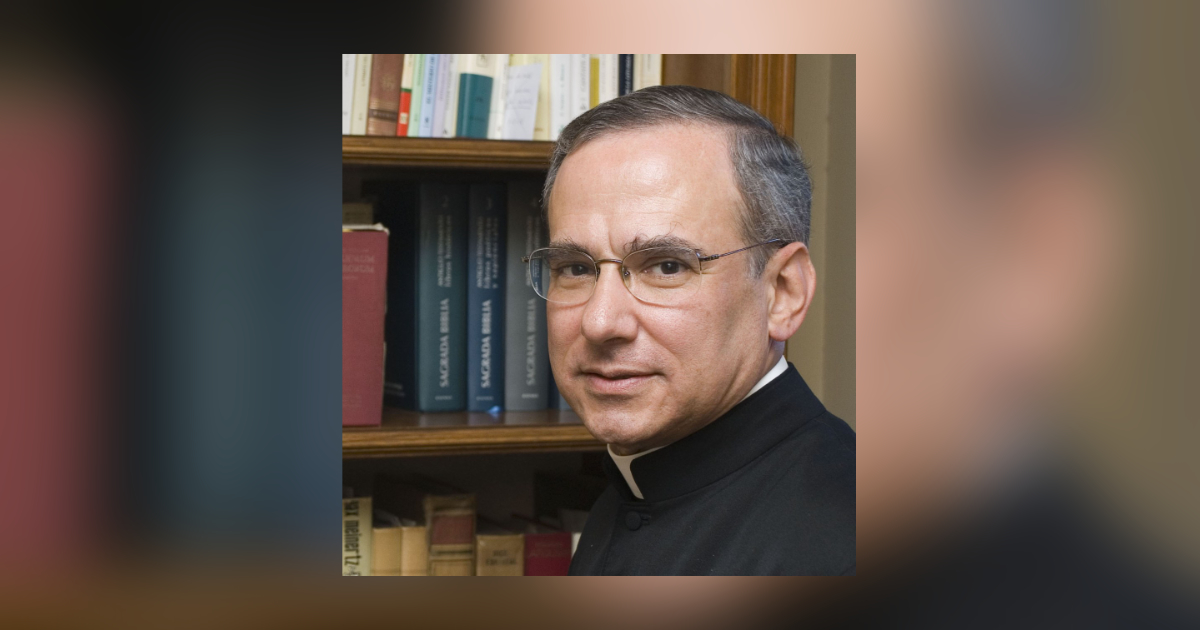
Javier López Díaz is a Spanish theologian and Opus Dei priest teaching at the Pontifical University of the Holy Cross in Rome. He has already written a number of works dealing with the theme of the sanctification of work and ordinary life in the spirit of St Josemaría Escrivá. This short work provides the reader with a very accessible outline of the role of the laity in the Church, in three sections, as suggested by the book’s subtitle, Identity, Work and Spirituality.
1. Christian identity
In the first section, we are given a historical overview of the evolution of the understanding of the Christian identity of the layperson in the Church. It is particularly noteworthy that the Catholic Church, during the first three centuries of her history, had an elevated view of the role of the laity, who were not called to leave or spurn the world but to be present in marketplaces, baths, shops, offices, inns, and feasts like other citizens, as Tertullian asserted in the third century, and not to live a life apart from others, as the second-century Letter to Diognetus affirms.
Nevertheless, in the centuries following the end of the era of persecutions, there was a gradual loss of the sense that the lay state was a vocation in itself. In its place, the monastic ideal of contemptus mundi grew, overshadowing to some degree the understanding of the amor mundi of the lay faithful. This is reflected in the fact that virtually all canonised laypersons (excluding martyrs, who are canonised on account of how they died, not how they lived) of the medieval era are kings or queens (such as Wenceslaus of Bohemia, St Louis of France, and St Elizabeth of Hungary), whose royal status seems to count for more than their lay status. (In Ireland, this dearth of lay saints is even more pronounced: as far as I can tell, the only lay saints stricto sensu in the millennium and a half of Irish Christianity are Saints Ethnea and Fedelmia, daughters of the High King Lóegaire mac Néill, converted by St Patrick.) Increasingly, in the medieval period, the monastic or religious life was taken as the model of Christian identity.
It was exceptional figures in spiritual theology such as St Francis de Sales (1567–1622), St Alphonsus Maria de Liguori (1696–1787), and St John Bosco (1815–1888) who tried to re-establish something of a spirituality better suited to life in the world than a purely religious spirituality, though secularity per se was not considered by any of them to be intrinsic to their search for holiness. They promoted a “spirituality for the laity” rather than a “lay spirituality” proper. That would have to wait for the twentieth century.
The impetus for the re-evaluation of the lay vocation was provided by the advent of secularism from the Age of Enlightenment onwards. In the face of the increased dechristianisation of society through the eighteenth and nineteenth centuries (particularly through liberalism and Marxism), the Church was increasingly forced to rely on the laity to reach areas from which clerics and religious found themselves excluded.
López Díaz makes the important observation that not all of the anti-clerical secularism of this period was unjustified: in this movement there was an understandable and justifiable desire to secure the legitimate independence of a lay or secular domain from ecclesiastical intervention. Thus, “Only a spirit of Christian freedom in the middle of the world, a secular and lay Christian spirit, could give a satisfactory response to the challenges presented by modern ideologies, heal the fissure between society and the Church, and direct human progress in a manner consistent with human dignity.” The Church was forced by the crisis of modernity to deepen her self-understanding, particularly regarding the vocation and mission of the lay faithful.
From the papacy of Leo XIII (1878–1903) onwards, there were concerted efforts to establish a lay apostolate, in particular through what eventually became known as Catholic Action under the stimulus given it by Pius XI (1922–1939). However, the apostolate of the laity here was only ever envisaged as, in the words of Pius XI, “a participation and collaboration of the laity in the apostolate of the hierarchy.” In other words, it was not “their” own apostolate that was exercised, but that of the hierarchy through them. As well as being an impoverished understanding of the laity, this approach risked clericalising them, reducing them to a clerical longa manus while also allowing the clergy to intervene illegitimately in the properly secular sphere (such as politics).
St Josemaría Escrivá, who, under divine inspiration, founded Opus Dei in 1928, proposed a very different understanding of the lay vocation, spirituality, and mission. For him, there exists a properly lay spirituality that is not an adaptation of religious spirituality, as well as a properly lay mode of apostolate that is not merely an extension of that of the clergy (while always exercised in union with the ecclesiastical hierarchy). He reversed the tendency to prioritise the mission of the laity over their sanctity: mission flows from holiness, not the other way around.
Furthermore, he showed with great clarity that the laity have a mission that belongs exclusively to them: to sanctify the world ab intra (“from within”). This is not mandated by ecclesiastical decree nor carried out under ecclesiastical oversight. The temporal order—married life, economic and political activity, and so forth—is theirs to sanctify from within as legitimate participants in these affairs. This also implies that their legitimate freedom in such areas must be respected, both within and outside the Church. For Escrivá, this freedom in debatable matters is essential.
These insights, along with those of other twentieth-century theologians such as Louis Bouyer, Marie-Dominique Chenu, Yves Congar, and Henri de Lubac, found their way into the teaching of the Second Vatican Council (1962–65). López Díaz argues that Escrivá’s contribution was distinctive in grounding the lay vocation directly in Baptism as its sufficient foundation. From Baptism, the lay faithful receive divine filiation, the common priesthood, and their inheritance as children of God—realities that are lived out precisely through engagement with the world.
2. A vision of work
The second part of the book turns to the theology of work, noting that this theme, like that of the laity, suffered from long neglect. Scripture, however, presents work in a profoundly positive light: in Genesis, human labour is shown as a continuation of God’s creative action, and in the Incarnation, Christ Himself spends most of His earthly life working. This stands in contrast to the ancient world, where manual labour was often despised.
In the early medieval period, however, the esteem for work declined, becoming associated primarily with asceticism rather than with its secular and social dimensions. The Reformation further diminished its theological value by denying that human works could contribute to sanctification.
It was only with the upheavals of the Industrial Revolution and the rise of modern ideologies that the Church returned seriously to the question, notably in Leo XIII’s Rerum Novarum. Yet a fully developed theology of work remained elusive.
Here again, Escrivá made a decisive contribution by linking the sanctification of work directly to Baptism. Work becomes a means of living out one’s identity as a child of God. This insight anticipated the Second Vatican Council’s emphasis on the universal call to holiness and has since entered deeply into the Church’s magisterium, including Laborem Exercens and the Catechism of the Catholic Church.
3. A lay spirit
In the final section, López Díaz summarises lay spirituality in three key concepts: filiation, inheritance, and priesthood. These express the richness of the baptismal vocation as understood by Escrivá.
Through Baptism, the Christian becomes a true child of God, sharing in Christ’s priesthood and inheriting the created world as a field of sanctification. This is not a metaphor but a real participation in divine life. The Christian, seeing God reflected in creation, is called to transform it and ultimately to bring it to fulfilment in God.
A pivotal moment in Escrivá’s life occurred on August 7, 1931, when, during Mass, he experienced a profound insight into Christ’s words: “And I, when I am raised up, will draw all things to myself” (John 12:32). He understood this as referring not only to the Cross but also to the elevation of Christ in the midst of human activity. When Christ is placed at the centre of all things, human work itself becomes part of the offering made to the Father in the Eucharist.
The life of the Christian, therefore, is deeply Eucharistic: all actions flow from and return to the Mass.
Historically, however, this vision had been obscured. The rise of spousal models of holiness, the Reformation’s external view of grace, and post-Tridentine emphases on the ministerial priesthood all contributed to a diminished awareness of baptismal filiation and the common priesthood. Only in the twentieth century were these dimensions fully recovered.
Finally, López Díaz notes that the notion of “inheritance” had also been reduced—either to the purely future beatific vision or to a spirituality detached from ordinary life. Against this, Escrivá’s teaching restores the full scope of the Christian vocation: the world itself, in all its material and cultural dimensions, is the proper arena of sanctification for the laity.
Rev. Gavan Jennings
Rev. Gavan Jennings is a priest of the Opus Dei Prelature. He studied philosophy at University College Dublin, Ireland and the Pontifical University of the Holy Cross, Rome and is currently the editor of Position Papers.