
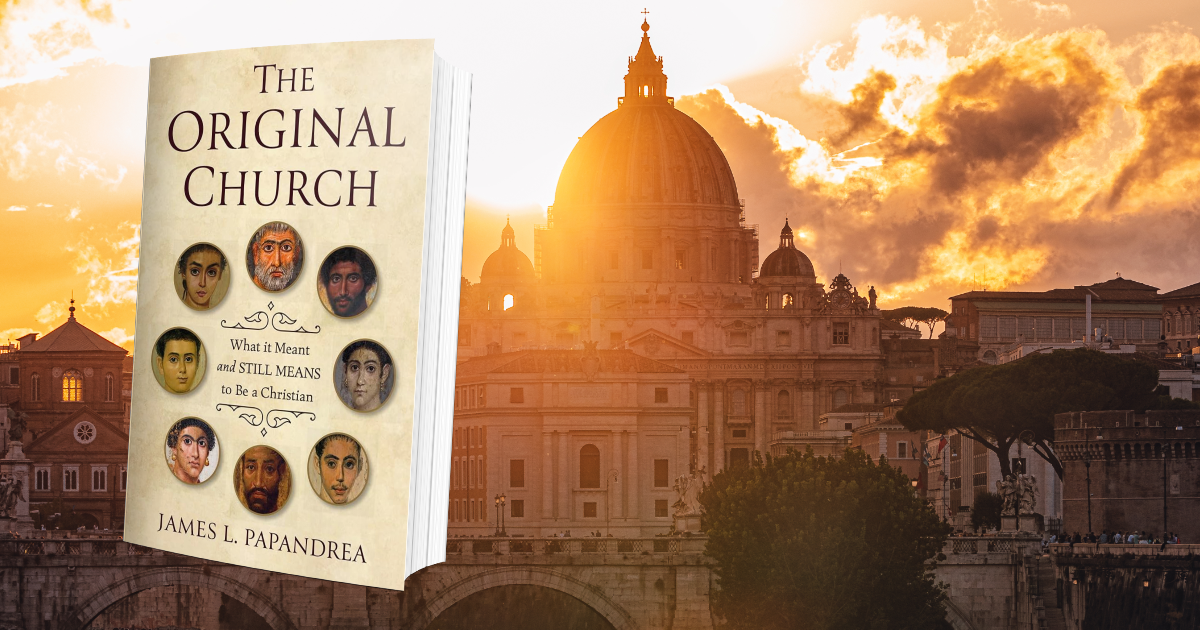
The Original Church: What It Meant—and Still Means—to Be a Christian
James L. Papandrea
Scepter Publishers
September 2025
152 pages
ISBN: 978 1594175732
The author of this short book is an Illinois-based professor of Church history who leads an online ecumenical community of readers interested in early Church history and hosts “The Way of the Fathers,” a popular podcast on Catholic Culture’s platform.
The book reflects the author’s own spiritual journey, which culminated in his conversion to the Catholic faith. He is deeply aware of the differences between what Catholics and Protestants of various persuasions practise and believe. He is also aware of misconceptions about Catholic belief and practice, having had a strictly Protestant upbringing. When preparing for Confirmation, his class were taught that the Protestant Reformation was about “getting rid of all the things the Catholic Church had added to the Faith, in order to get back to an original form of Christianity, a supposed pristine form, before it was ruined by the addition of superstitions and man-made traditions.”
Papandrea believed this right through his teens and early college days, and when working for his PhD he was determined to study what this “original Church” looked like. As he delved through the writings of the early Fathers, and those of contemporary observers during the Roman Empire, it became obvious to him that the Catholic Church has always been the most authentic expression of original Christianity, and that the Reformers stripped away many elements of original Christianity that have always been part of the Faith.
In each of six chapters he highlights myths that have grown up alongside the corresponding facts. Among the myths countered are:
- that the Protestant Reformation was a reset to an original form of Christianity;
- that devotion to the Blessed Virgin was a later corruption of original Christianity, when in fact it was part of the original Church from the very beginning;
- that one must be of age to receive Baptism, when the original Church always baptised infants;
- that one can simply confess sins directly to God, whereas the Sacrament of Confession has always been deemed necessary;
- that sola scriptura is patterned after early Christianity, when in fact the original Christians knew they needed Tradition to interpret Scripture;
- that clerical celibacy was an invention of the Middle Ages to prevent the sons of clergy from inheriting their fathers’ position or land, whereas in fact it developed in the West in the fourth century.
These give just a flavour of the book, which is written in a direct, easy-to-read, and non-polemical style. Every chapter includes quotations from the early Fathers, most frequently St Justin Martyr, but Tertullian features too, as do Aristides and Athenagoras. If, as last month’s edition of Position Papers suggests, there are growing numbers of people looking towards the Catholic Church, this book will greatly help them on their road to Rome.